

Lupus 101
Class is in Session! Learning the Basics of Lupus


Hi everyone! As you already know from last week's newsletter, May is Lupus Awareness Month. Before I get into the details about my personal journey from early symptoms to diagnosis to my current situation, it is important to get familiar with what lupus is and how it affects the body.
This newsletter is the first chapter in my e-book, Musings of a Lupus Warrior: A Collection of Essays and Notes on Gratitude. You can purchase my e-book below:
Class, let's begin. 😊
Chapter One: Lupus 101
Medical Disclaimer:
The information provided is for informational purposes only and does not constitute medical advice, diagnosis, or treatment. It is not intended to be a substitute for professional medical advice, diagnosis, or treatment. Always seek the advice of your physician or other qualified healthcare provider with any questions you may have regarding a medical condition. Do not disregard professional medical advice or delay in seeking it because of something you have read in this e-book.
Some of you may know someone living with lupus - a family member, friend, loved one, or coworker. Some of you may have never heard of it before. When I was first diagnosed and started telling others about lupus, several would say, “Oh yeah! My such and such has that.” In general, I find that many folks are familiar with the term “lupus” and understand that it’s a serious health condition, but what exactly is lupus?
What is Lupus?
Lupus is an autoimmune disorder where the body’s immune system fights and attacks healthy tissue and cells. The best simplified explanation of lupus I’ve ever heard came from a rheumatologist (a doctor who diagnoses and treats lupus and other autoimmune conditions) I had the pleasure of meeting at a lupus conference in Orlando several years ago. Here’s what she said:
In the United States of America, we have various branches of the military – Army, Navy, Marine Corps, Coast Guard, and Air Force. All of these branches have their own separate roles to fulfill but the mission is singular: to defend and protect our country from foreign enemies.
The human body has a “military” of its own called the immune system. Your body’s military consists of various types of white blood cells, including neutrophils, macrophages, eosinophils, and natural killer cells. Each type of cell has its own specific role to play in your body’s immune system, but the common goal is singular: to defend and protect the human body from foreign invaders (bacteria, viruses, germs, etc.).
In lupus, something goes terribly wrong when certain types of white blood cells cannot tell the difference between foreigners (bacteria, the flu) and normal, healthy tissue. It is like the Army not recognizing innocent civilians and shooting them down. It’s like the Marines seeing the Coast Guard as a foe instead of its fellow ally, and therefore, targets them as enemies.
When the components of your body’s “military” are not in alliance, joint pain, swelling, and organ damage can occur. I have personally had all three at various stages. I deal with pain on a daily basis; I have occasional swelling; and I’ve experienced organ damage.
What Causes Lupus?
The cause of lupus is unknown. Researchers suggest that genetic, environmental, and hormonal factors can play a role in the development of lupus. Lupus is not contagious, and it is not cancer-related or HIV/AIDS- related.
Types of Lupus
There are four categories of lupus:
Cutaneous/Discoid lupus - lupus of the skin only, no internal organ damage involved
Drug-induced lupus - caused by certain prescription medications, but symptoms disappear after meds are stopped
Neonatal lupus - a rare condition that affects infants of women who have lupus
Systemic lupus erythematosus (SLE) - causes damage to internal organs as well as the skin. Only about 10% of discoid lupus will later become systemic lupus; however, most systemic lupus (SLE) patients’ first symptoms are the discoid lesions (skin rashes)
Lupus Statistics
According to the Lupus Foundation of America, 1.5 million Americans and at least five million worldwide have lupus
Lupus occurs more so in women than in men (90%)
Women of color (especially Blacks, Hispanics, Asians, Native Americans, etc.) are 2-3 times more likely to develop lupus than Caucasians
Lupus usually occurs between ages 15-44, but more prevalent in early/mid 30’s
According to lupus.org, there is a 20% hereditary
In spite of the statistics, lupus does not discriminate. Lupus occurs in children, teens, men, Caucasians, etc. In fact, lupus symptoms are more severe in children and teenagers; they tend to have more severe organ damage than adults.
Although women by far are diagnosed at a higher rate than men (9 out of 10), men generally have more severe symptoms than women. This could likely be due to the stereotype or idea that men do not frequent the doctor as much as women, and symptoms may worsen to the point where significant damage occurs.
Lupus Symptoms
The following are the most common (not all) symptoms experienced by lupus patients:
Butterfly rash” (hallmark of lupus)
Photosensitivity
Other rashes/skin lesions on the body
Chronic fatigue
Joint pain, swelling of hands and feet
Mouth sores/ulcers
Blurred vision
Shortness of breath/pleurisy
Swollen glands
Headaches
Fever
Hair loss
Illness/infection that does not go away, even after several courses of treatment (recurrent infections)
A Key Take-Away Regarding Lupus Symptoms
Lupus presents itself differently in everyone. No two people experience the same exact symptoms in the same way. Although there are common symptoms that are shared, everyone has their own unique story and experience with lupus.
To all my fellow lupus warriors — keep fighting!
Life Beyond Lupus Substack Newsletters, July 13, 2025; July 20, 2025
Medical Disclaimer:
The information provided is for informational purposes only and does not constitute medical advice, diagnosis, or treatment. It is not intended to be a substitute for professional medical advice, diagnosis, or treatment. Always seek the advice of your physician or other qualified healthcare provider with any questions you may have regarding a medical condition. Do not disregard professional medical advice or delay in seeking it because of something you have read in this e-book.
For more information, please visit the Lupus Foundation of America.
Alabama Lupus Support Group
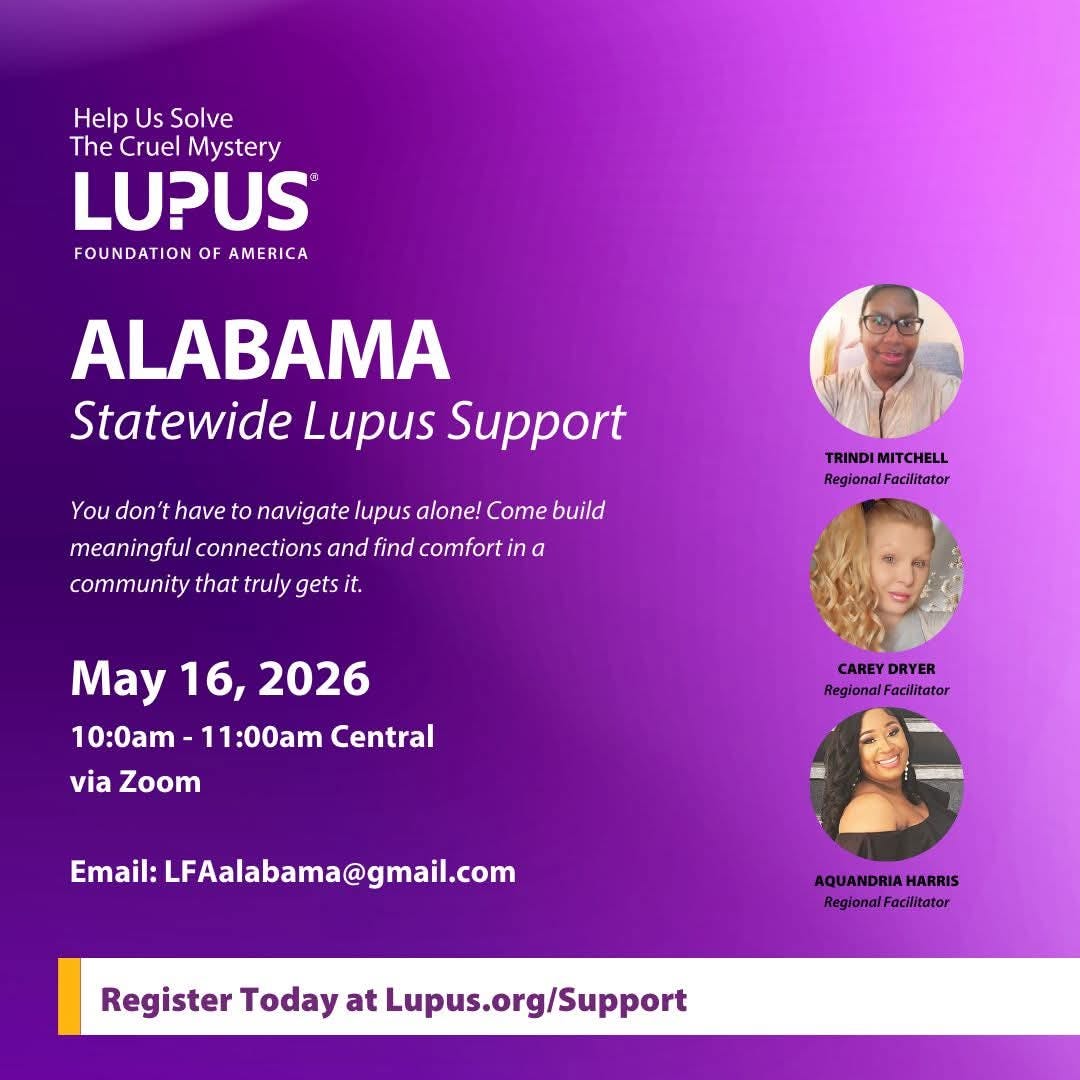
The Alabama Lupus Support Group (Virtual) will be meeting this SATURDAY, MAY 16, 2026, at 10 a.m. CST. Please join us as we celebrate Lupus Awareness Month! 💜🦋 If you're living with lupus, caregiver to a lupus patient, living with another autoimmune disease/chronic illness, friend/family member, or just wanting to know more about lupus, feel free to join us, we welcome everyone! You MUST REGISTER in order to attend. 👇🏾
https://us06web.zoom.us/meeting/register/r92CNw5sTtyS6iTvZx691w#/registration
The symptom list alone should be required reading for everyone who has ever said, "Hey, but you don't look sick." 😅
Trindi, this is such an important piece. Educational without being clinical, and personal without oversharing. That military analogy is genius. Bookmarking this to share with people in my life who still don't quite get it. 💜